
Perlas Atelier began with a love of pearls.
When I was a young girl, my mum gifted me a pearl set, a necklace and a pair of earrings. I thought they were the most beautiful things I owned.
I looked up to my mother so much; she was always beautiful, elegant, and poised. The gift was a small sign of her thinking of me while she travelled, and it became the beginning of my fondness for pearls and their quiet, hidden beauty.
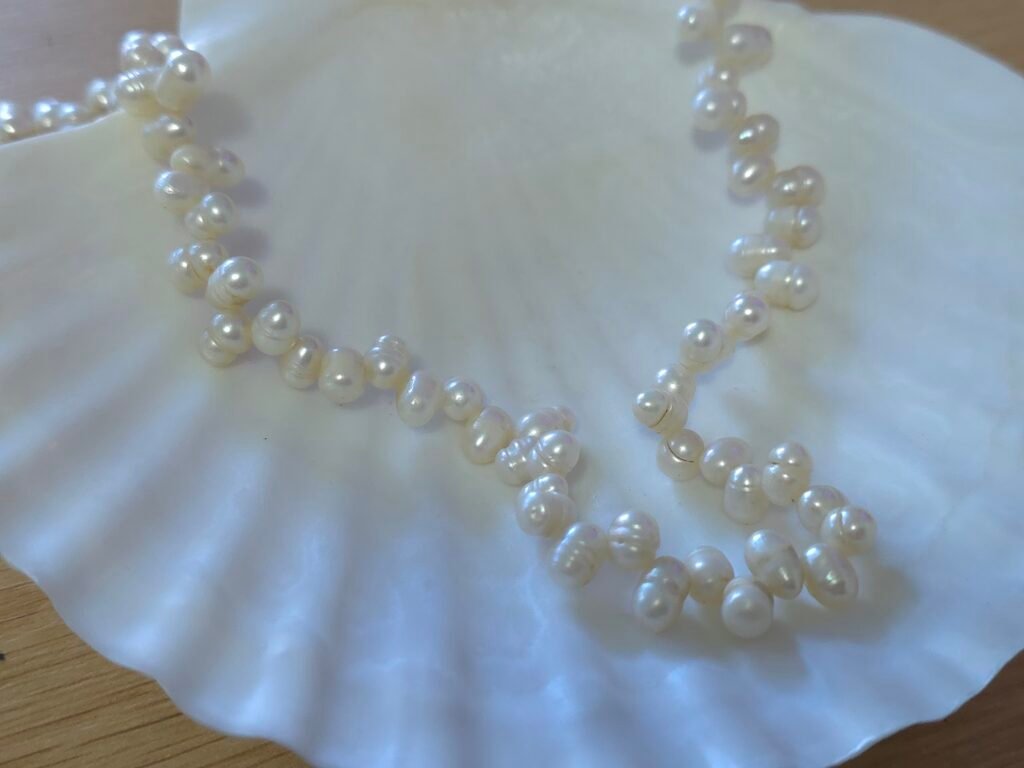
To Filipinos, the pearl carries deep meaning. Our national hero, Dr. José Rizal, called the Philippines the “Pearl of the Orient Sea,” and in 1996 the South Sea pearl was recognised as the country’s national gem. For generations, Filipino women have worn pearls as a symbol of pride, reverence, and natural beauty: heirlooms that hold the stories of each person who wears them and are passed down through families.
There is something deeper still in how a pearl comes to be. It begins as an irritant, and through patience and time it is transformed into something beautiful. To me, that mirrors the Filipino spirit, and the human spirit, of meeting hardship and turning it into grace.
Pearls are formed by mollusks such as oysters and mussels, as a natural defence. When an irritant enters the shell, whether a grain of sand, a piece of debris, or a parasite, the mollusk coats it, layer by layer, with nacre, the same lustrous material that lines its shell. Over time, that quiet act of protection becomes a pearl.
So a pearl is not only beautiful in itself; it is beautiful in how it is made. It has character. It represents something far greater than being one of the loveliest gems in the world.
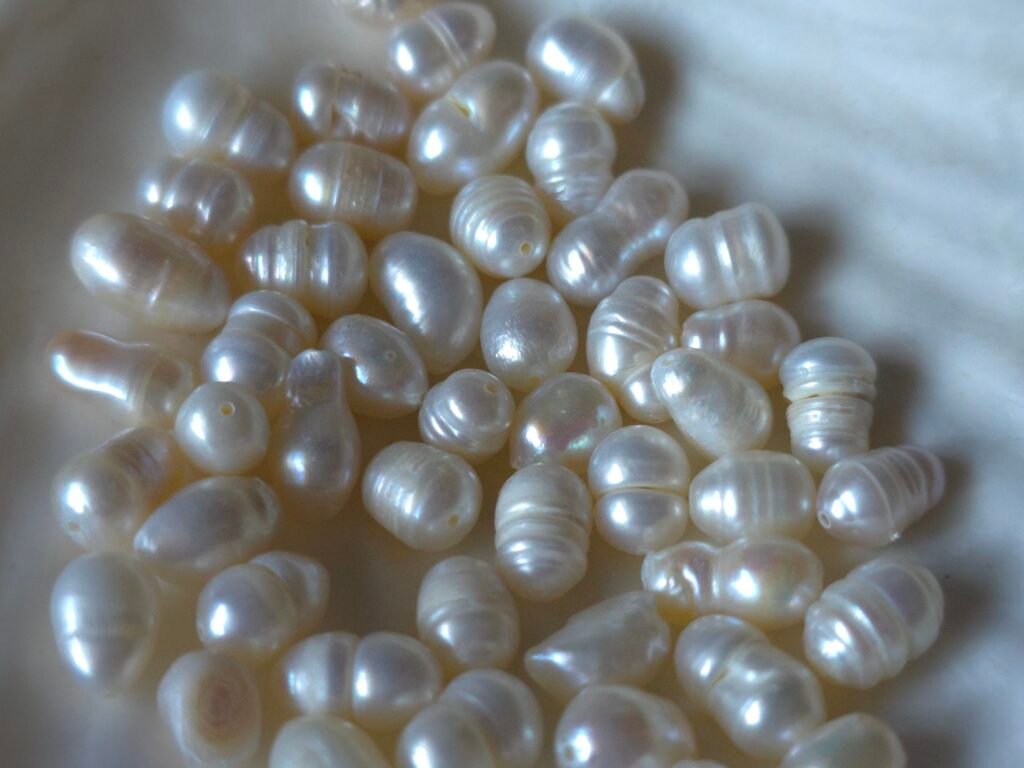
A pearl is not only beautiful in itself; it is beautiful in how it is made.
When I was in Grade 8, my mum took us to a little craft café in the old town of Highfields called Danish Flower Art Café. She let me buy some beads, wire, and a tool, all I needed to begin making jewellery. I made a bracelet for myself and one for my mum. They were simple, but making them gave me a sense of pride, and giving one to my mum warmed my heart and made it full.
Then life kept moving. I ran out of beads. I had to focus on my studies and on becoming an adult, and I stopped making jewellery. I would think about those pieces every now and then, but they held little significance next to the weight of the assignments I had to finish to earn my degree.
I found new passions, made friends, and learned more about life. I married my best friend from high school. We tried for a child, lost a child, and then were given another, and another. We moved cities. Life rose and fell.
And then, at one point, life began to wear me down. I was living with postpartum depression, isolated from family and friends, without a community, caring for two very young children on my own while my husband worked hard to provide for our small family. That was when it hit me: I was no longer who I thought I was. I was not who I wanted to be. I was losing my sense of identity.
There were things about myself I did not like. I always put myself last, because I believed that was what being a mother meant, and in doing so I had misunderstood what it meant to be a wife, a mother, and a daughter of Christ. I did not want to stay that way.
So we moved back closer to home. My husband arranged to work entirely from home, and together we devoted ourselves to caring properly for our family. I began to ask myself what I was passionate about, and who I really was. I remembered that I love to make things. I love using my hands. I love to design. I am a mother, a wife, and a daughter, but I am also a creative.
I thought about everything I liked to make: a drawing, a painting. I thought about what I could create while still being present for my children and my marriage. And then I remembered those quiet hours at my desk, twisting wire and placing beads together, making something to be worn.
My jewellery-making days, the ones that made the loud days quiet.
Simple, but brought together with intention. That was when I realised I could make things to give to people. I did not need a lot of money. I did not need a lot of talent. I only needed something thoughtful and intentional. I wanted to keep making, to return to something from my forgotten youth, my lost art. And what began as something small became something meaningful enough to share with others. I never wanted to make huge sales or grow as large as other companies. I wanted to share my craftsmanship, and to enjoy its beauty alongside others.
I thought about all the things this art could become: how I could share my story, how I could reach others who carry the same stories, how I could give back to my community through what I earn, how I could exercise the creativity God gave me, and how I could stay close to my heritage, because my culture and my roots are part of who I am. Where I have been is what drives me. And through this, I could practise kapwa, the deep sense of shared humanity that calls us, insistently, to live closer to how God intends: loving others first.
Perlas Atelier was born.
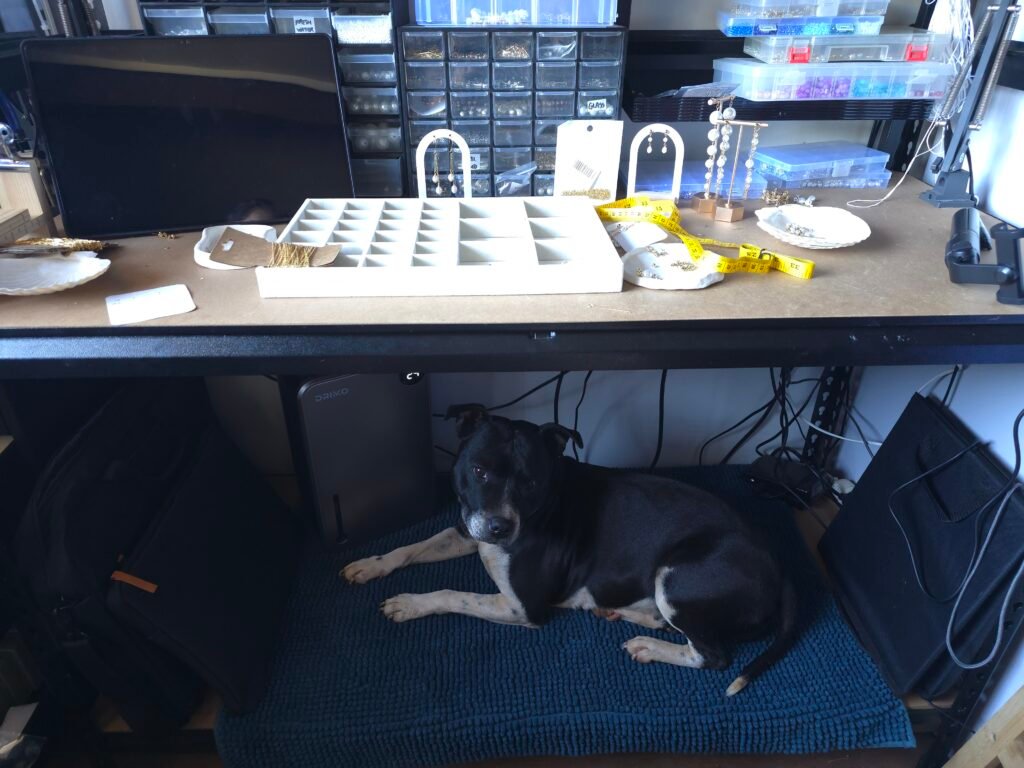
My workshop is simple: a shelf turned into a workbench, beside a window in our garage at home. It is a small space, but it is where I can slow down and feel grounded. I do most of my work at night, since motherhood fills most of my days.
The space is small, but it means a great deal to me. My children can see what I create. Sometimes they join in with the beading; sometimes they simply look and appreciate the little things.
On the bench right now is my debut collection, Resilience. It speaks to the resilience we carry through our own experiences, and to the resilience of the pearl itself, formed slowly, through hardship, into something beautiful.
Beauty through hardship.
Resilience, the debut collectionThe butterfly came
from the sea.

Long before there was an emblem, there was a girl at a table full of shells. Whenever there was seafood, I found myself drawn to the mussel shells more than the meal. I would turn them over and study the nacre inside, the same soft, shifting lustre I already loved in pearls. It always felt wrong to throw something so beautiful into the bin.
There was one thing I noticed every time. When a mussel opens, the two halves fan out like a pair of wings. To me they looked like a butterfly, resting for a moment before it lifted away.
That image stayed with me for years. When it came time to design the Perlas Atelier emblem, I didn’t reach for anything new. I returned to those shells. What looks like a butterfly is really two mussels opened wing to wing, holding the same nacre that gives a pearl its light.
Beauty is often already there, waiting in the overlooked, asking only to be noticed and kept.
A quiet note when a new piece comes off the bench.
No monthly letters and no marketing, only a short note when a new piece is finished, or a small collection is ready to be poured. Sometimes weeks apart, sometimes months.